

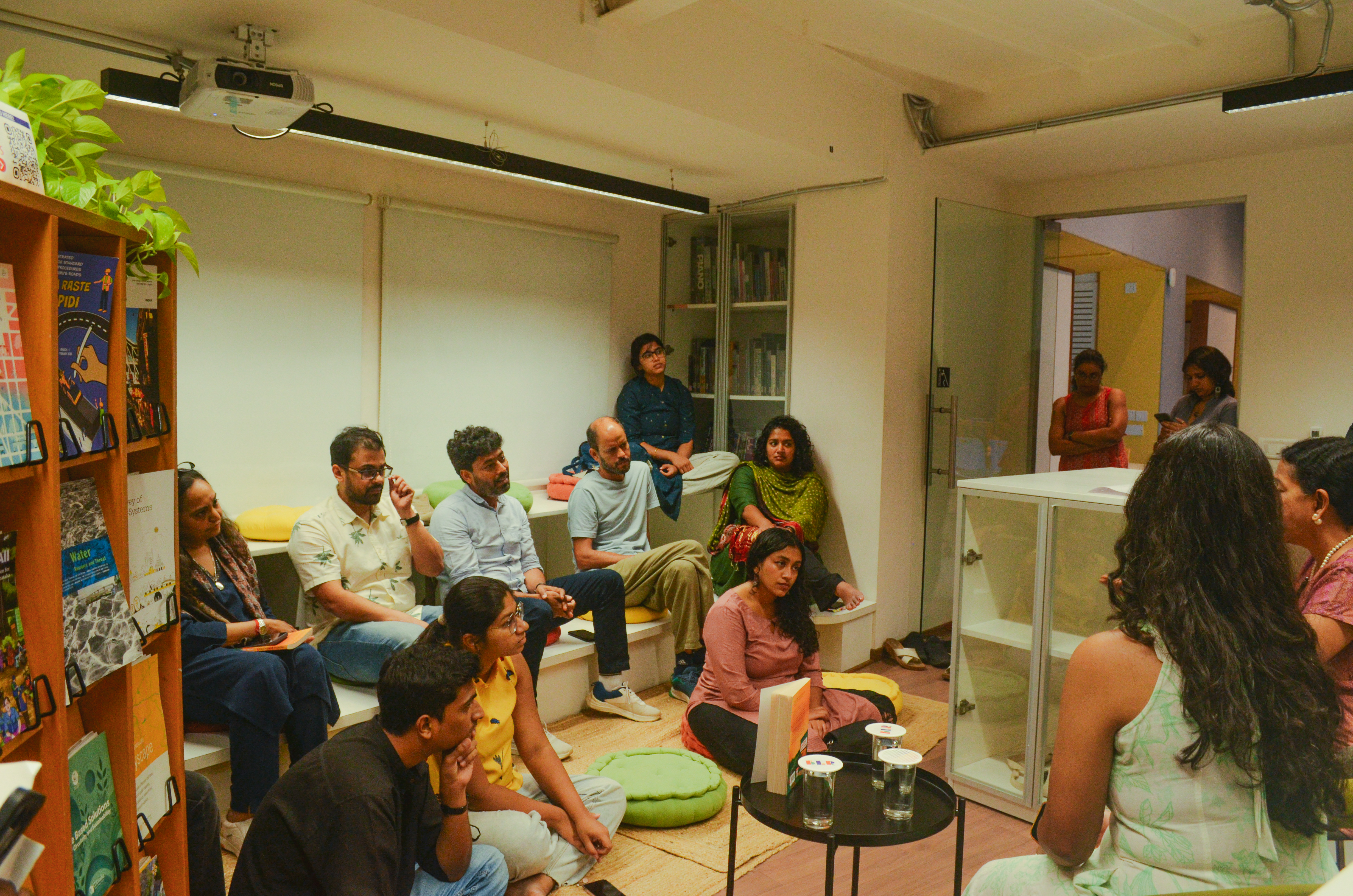


The Parallel Community Festival
At the heart of this festival lies a simple, radical act: someone stands before their community and says, this film is part of me. Not because they made it, but because it made them—reshaping how they see light, silence, longing, or a faraway street they’ve never walked. These are the films we carry quietly for years, the ones we return to in moments of doubt or joy, whose frames have fused with our own memories. When a member shares such a film, they’re not just programming a screening; they’re offering a piece of their inner landscape, trusting others to step inside and look around. Every discussion becomes a meeting of biographies—the life of the film and the lives in the room—where strangers discover they’ve been moved by the same unspoken things. This is cinema not as distant art, but as shared memory, as intimate as a favourite book passed hand to hand.
Over the course of June 10 to 12th, The Parallel Cinema Club will be screening four great arthouse films from across the globe.
El (1953) – Luis Buñuel [Friday 7:30 pm]
A wealthy, paranoiac husband’s obsessive jealousy turns his marriage into a surreal prison. Buñuel dissects male possessiveness with surgical precision and a quietly seething absurdity. It’s a film that doesn’t just portray madness—it lets you feel its suffocating texture from the inside.
The Kingdom of Diamonds (1980) – Satyajit Ray [Saturday 7:30 pm]
Goopy and Bagha wander into a glittering dystopia where a despot hoards both diamonds and minds. Ray turns a musical fantasy into a biting political fable, full of wordplay, wit, and defiant imagination. A deeply joyful reminder that the most powerful rebellion often arrives in the form of a song.
A woman walks away from marriage and convention, pursuing an ideal of love that the world cannot accommodate. Dreyer frames her in long, luminous takes where every silence feels like a reckoning. It’s a last testament of radical honesty, devastating in its stillness and its refusal to compromise.
A widow pours her life into a family grocery store until a forbidden love forces everything into the open. Naruse charts the quiet devastation of duty and unspoken longing with almost unbearable restraint. In the end, it’s a film about the vast emotional earthquake that happens when a single glance says what years of silence could not.
Related Events
